

Cross-Connection & Backflow Prevention
Keeping Our System Safe
On December 19, 2023, the State Water Resources Control Board adopted the Cross-Connection Control Policy Handbook, which took effect on July 1, 2024. The policy requires all public water systems to maintain a cross-connection control program.
Walnut Valley Water District administers its program in accordance with the handbook and applicable state regulations, including managing existing backflow prevention devices and evaluating potential cross-connections.
What Is Backflow?
WVWD’s drinking water system is designed to deliver safe, reliable water by maintaining positive pressure throughout the distribution system. Backflow occurs when water flows in the opposite direction of its normal flow. Although rare, backflow can occur when pressure in a water main drops unexpectedly, such as during a water main break, a sheared fire hydrant, or other events that reduce operating pressure within the system.
Backflow prevention devices are required for commercial, institutional, and medical properties, residential properties with fire sprinkler systems and any property where a potential cross-connection hazard is found.
What Is A Cross-Connection?
A cross-connection is any actual or potential physical connection between a public water system, and any source of non-potable liquid, solid, or gas that could contaminate the drinking water supply.
Together, we can help keep our water safe by reducing cross‑connection risks at home. Irrigation systems, hose‑end sprayers for pesticides or fertilizers, pools, and other outdoor equipment can all create cross‑connection risks if not used properly.
What is a Hazard Assessment?
A hazard assessment is a review of a property or water service to identify whether an actual or potential cross-connection could allow contaminants to enter the public drinking water system through backflow. As part of this process, Walnut Valley Water District evaluates water use, plumbing connections, equipment, and site conditions to determine whether backflow protection is needed.
Frequently Asked Questions: Backflow Prevention
What is a backflow prevention assembly and how is it approved?
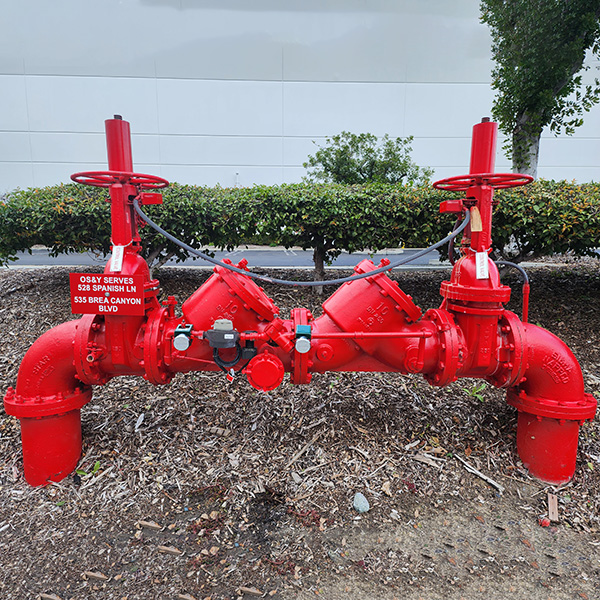
Backflow prevention devices or backflow preventers are installed to prevent the backflow of contaminants into drinking water through cross-connection. A backflow prevention assembly is an approved, testable assembly that uses check valves and/or relief valves, in different configurations, to prevent potential contaminants from flowing into the drinking water system.
An approved backflow prevention assembly has gone through an approval process at the Foundation for Hydraulic Research and Cross Connection Control at the University of Southern California. This is a two-step process of laboratory tests and a 12-month field test. Assemblies that successfully complete the entire testing procedure and receive WVWD approval are considered approved backflow prevention assemblies.
Am I required to have a backflow prevention device?
Backflow prevention devices are required for commercial, institutional, and medical properties, and for residential properties with fire sprinkler systems. In some cases, a Cross-Connection Control Specialist may also require a device if a potential hazard is found.
Federal and State law requires that water suppliers protect their water systems from contamination. When WVWD makes a determination that the drinking water system may be subject to contamination through a backflow condition, the customer will be notified and required to install an approved backflow prevention assembly. Per WVWD’s Rules and Regulations, Article 8, the customer has a period of sixty (60) days to complete all corrective action required, including installing and testing a District-approved backflow prevention assembly.
Who can test my backflow prevention assembly?
Customers must hire a certified backflow tester.
Starting July 1, 2026: Only AWWA-certified testers will be accepted.
You can find a registered backflow testing company here.
WVWD has contracted Aqua Backflow, Inc. to manage the program (they do not test, repair, or install backflow devices). For questions please email info@AquaBackflow.com or call 847-742-2296.
Why is annual testing and maintenance of my backflow prevention assembly required?
WVWD’s Cross Connection Control Program and the California Department of Health Services require all backflow prevention assemblies to be tested annually. You will receive a letter as a request to have your annual backflow test completed. Customers must hire a certified backflow tester.
To ensure that backflow assemblies are protecting public health and the environment, the State of California’s Administrative Code, Title 17, Chapter 5, Public Health, and Article 8 of our District’s Rules and Regulations [LL1] require the customer of any premises upon which cross-connection (backflow) control devices are installed to maintain the devices in a continuous state of good repair and to have the devices tested annually.
How are my backflow test results submitted?
Customers must have their test results submitted by the testing company online at www.TrackMyBackflow.com.
For questions or test results, please email info@AquaBackflow.com or call 847-742-2296.
To speak with a WVWD representative call 909-595-7554 or email backflow@walnutvalleywater.gov.
What do I do if my backflow prevention device is stolen?
If your backflow prevention device is stolen, you will be without water until the backflow equipment is replaced, inspected, and certified. To prevent theft, WVWD recommends one of the following, an installation guide is available here.
To avoid additional cost and nuisance, the following is recommended:
Painting
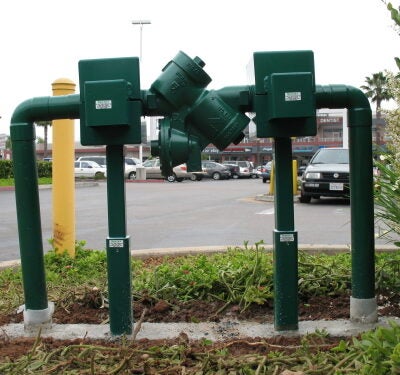
This activity not only camouflages your device, but the metals are no longer considered clean scrap and are of less value to theft.
Planting
Hide a backflow prevention device as part of your landscape. Please ensure access for backflow prevention device maintenance.
Security Equipment
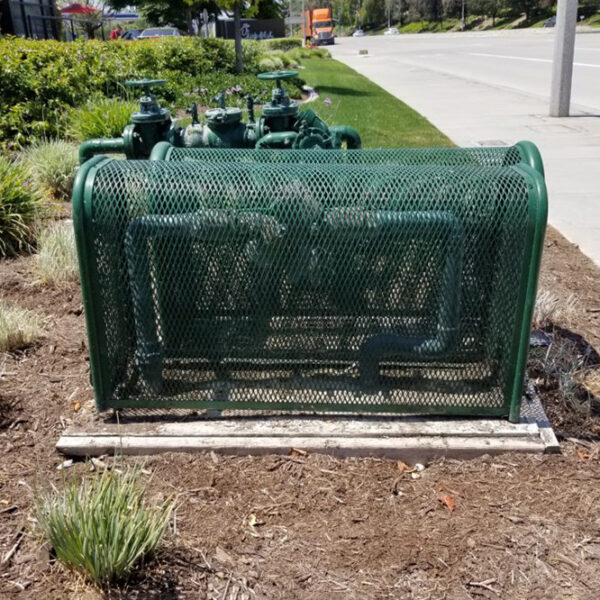
Backflow equipment enclosures, cages, or other security devices are strongly recommended. This reduces the risk of theft and protects devices from being damaged or tampered with. Some plumbing or backflow testing companies are capable of installing security devices.
What equipment can be used to secure a backflow prevention assembly?

Frequently Asked Questions: Cross-Connection Control
What is a cross-connection?
A cross-connection is an actual or potential connection between the public water supply and a source of contamination, in which the contamination can flow back into the public water supply.
How can I help prevent cross-connections on my property?
Following these simple practices can help protect your drinking water and prevent contamination of the public water system.
Do:
- Keep hoses out of pools, buckets, and containers.
- Use an air gap or approved backflow prevention devices
- Install vacuum breakers on hose bibs. These can be found in most hardware stores.
Do Not:
- Do not submerge hoses in water or chemicals.
- Do not attach chemical sprayers directly to hoses without backflow protection.
- Do not connect equipment to drinking water lines without proper safeguards.
Frequently Asked Questions: Hazard Assessment
Please select the appropriate questionnaire below:
Why do I have to complete a Hazard Assessment Questionnaire?
Under the State Water Resources Control Board’s Cross-Connection Control Policy Handbook, Walnut Valley Water District is required to conduct hazard assessments throughout its service area, including residential and non-residential properties when hazard conditions may exist.
To meet these requirements, the District has implemented a Hazard Assessment Questionnaire to gather information about water uses and potential cross-connections on a property. The information provided helps the District evaluate potential risks to the public water system and determine whether backflow protection is needed.
As part of the hazard assessment process, all customers are required to complete a Hazard Assessment Questionnaire for each property they own or occupy. This applies to both residential and non-residential accounts.
What information does the questionnaire ask for?
The Hazard Assessment Questionnaire helps the District identify how water is used on the property and whether conditions exist that could pose a risk to the public water system. Information collected may include:
- Irrigation systems
- Fire sprinkler systems
- Commercial or industrial equipment
- Alternate water sources, such as wells
- Chemical or fertilizer injection systems
- Other potential cross-connections to the water system
What happens if I do not complete or return the Hazard Assessment Questionnaire?
For any premises where the Developer/Owner does not cooperate or refuses to provide the information necessary to complete a hazard assessment, the Developer/Owner will be required to install a backflow prevention assembly (BPA) for meter service protection. Failure to install the appropriate BPA may result in water service disconnection per the District’s Rules and Regulations.
These requirements are established under the District’s Rules and Regulations and its Cross-Connection Control Plan (CCCP) and administered in accordance with the State Water Resources Control Board’s Cross-Connection Control Policy Handbook (CCCPH). This program applies to all service connections within the District’s jurisdiction.
What happens after I submit the questionnaire?
After you submit the Hazard Assessment Questionnaire, District staff will review your responses to determine:
- Whether a hazard is present
- The level of risk (high, low, or no hazard)
- Whether a backflow prevention device or other mitigation is required
In cases where the responses indicate a cross-connection hazard, a follow-up on-site hazard assessment may be conducted to determine whether backflow preventive measures are in place and to confirm that existing measures are correctly implemented. A District Cross-Connection Control Specialist (CCCS) will determine whether a follow-up on-site survey is required.